
Brainstorm Test: Tricky Puzzle
Tribom GamesTrivia
4.1356.00 Reviews
- Version
- 1.2.2
- Installs
- 1.00M
- Age Rating
- Everyone
Screenshots
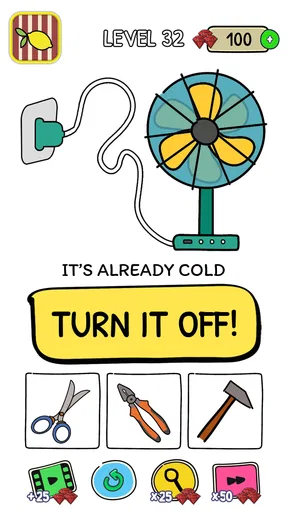
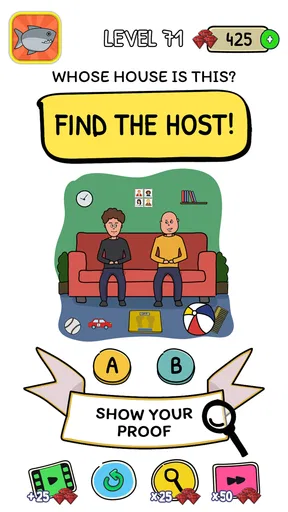
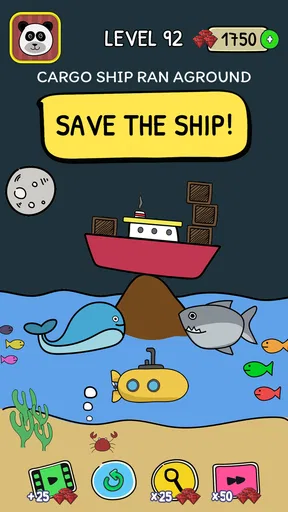
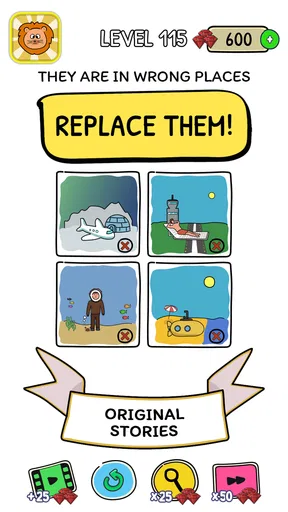
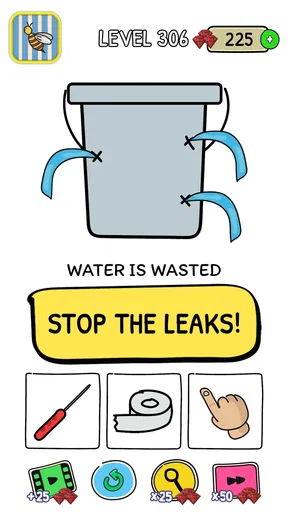
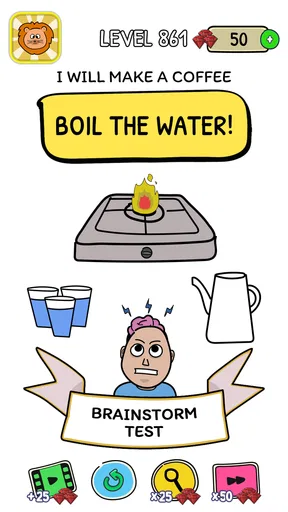
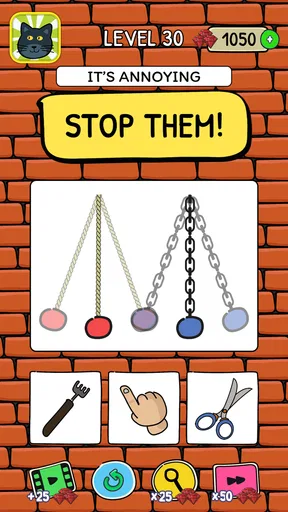
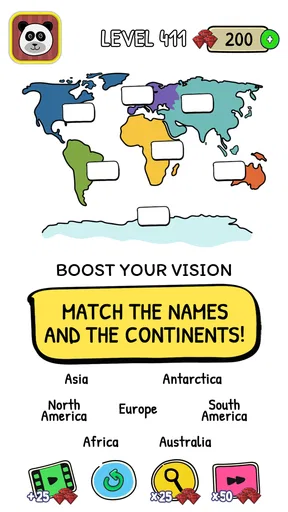
Our Review of Brainstorm Test: Tricky Puzzle
 Analysis by Appyee
I approached Brainstorm Test: Tricky Puzzle expecting a light trivia game, but its appeal is really in the way it makes familiar-looking questions feel less straightforward. Developed by Tribom Games, this free Android game sits in the trivia category and is aimed at anyone who enjoys testing attention, interpretation, and quick problem-solving rather than simply recalling facts. The store summary presents it as a brain-testing puzzle experience, and that is a fair description of the central idea.
After spending time with it, I see it as a good fit for short sessions: something to open while waiting for an appointment, taking a break from work, or sharing with someone who enjoys arguing over the “obvious” answer. It is not the sort of game I would choose when I want a deep story, a long strategic campaign, or a large competitive community. Its strength is narrower and more immediate: it tries to catch the player thinking too literally.
The game is free to download, with optional purchases listed from $1.99 to $29.99 per item. That makes the spending question important, especially for a puzzle game where mistakes and retries can affect how relaxed the experience feels. I found the best way to approach it was to treat each challenge as a small reasoning exercise, not as a race to clear everything as quickly as possible.
How the tricky-question format works in everyday play
I find the format works best when I treat each prompt as a small reading exercise, not a race to guess what the game expects. In an everyday break, pausing to compare the wording with my first instinct can make even a brief session feel more thoughtful. That habit also helps me judge whether a missed answer came from rushing or from a twist that simply did not feel clear.
Reading carefully matters more than rushing
The main appeal comes from the gap between what a question seems to ask and what it actually says. A player who skims can easily choose the answer that looks most familiar, while someone who pauses to inspect the wording has a better chance of spotting the twist. That makes the game feel different from ordinary trivia apps, where knowing more facts is usually the main advantage.
I liked that this style creates small moments of surprise without requiring a long tutorial. You can understand the basic purpose almost immediately: read the prompt, examine the possible response, and question your first instinct. The challenge is not only memory. It is also resisting assumptions, checking details, and accepting that the most obvious interpretation may be deliberately misleading.
That design also creates a particular kind of frustration. When I missed a puzzle because I had rushed, the mistake felt fair. When a question depended on an interpretation I would not naturally make, the result was less satisfying. Tricky puzzles work best when the wording gives the player a reasonable path toward the solution. If the twist feels too arbitrary, the game can seem like it is testing the author’s preferred answer rather than the player’s reasoning.
A useful game for short breaks
For everyday use, the short-puzzle format is more practical than a traditional quiz match. I could imagine opening it during a commute, playing a few challenges, then putting the phone away without needing to remember a complicated storyline or maintain a team. It also works as a casual conversation starter: two people can read a puzzle, choose different answers, and explain why they interpreted it differently.
That makes it especially suitable for players who enjoy brain teasers but do not want a demanding daily routine. It can also suit families because the content rating is Everyone. Still, an age rating should not be confused with universal appeal. Younger players may need help with wording or vocabulary, while adults who dislike “gotcha” questions may find the central gimmick tiring after repeated sessions.
I would not recommend it as a replacement for a serious learning tool. It may encourage careful reading and flexible thinking, but it is not the same as studying a language, practicing mathematics, or building a structured knowledge base. Its value is recreational: it gives your attention a small workout while trying to surprise you.
Progress feels more personal than competitive
One of the most useful ways to play is to keep track of the kinds of mistakes you make mentally, even if you do not write them down. I noticed three broad patterns that can affect performance: reading too quickly, assuming the question follows a familiar template, and focusing on one word while ignoring the rest of the sentence. Recognizing your own pattern makes later puzzles more interesting because you begin to challenge your habits, not just the individual question.
I also recommend waiting a moment before using any available help or moving on after a mistake. The answer itself is less valuable than understanding why the first interpretation failed. That approach turns the game from a sequence of wins and losses into a small exercise in checking assumptions. It is a more satisfying workflow for adults who want something mentally engaging rather than purely reactive.
On the other hand, players who want a clear sense of long-term achievement may find the format limited. A tricky question can be memorable, but it does not automatically create the same attachment as building a deck, improving a character, or climbing a visible league. The game’s motivation comes mostly from curiosity and the desire to solve the next surprise.
Spending should be treated as optional, not part of the challenge
The purchase range is broad enough that I would advise setting a personal limit before playing. The game is free, so a cautious player can begin without committing money. The listed in-app purchase range runs from $1.99 to $29.99 per item, which means the higher end deserves deliberate consideration rather than an accidental tap.
I would not spend simply because a puzzle made me feel stuck. That is exactly when it is better to reread the wording, take a short break, or ask another person to interpret it. A purchase can be reasonable if it provides something you genuinely want and the cost fits your budget, but frustration is a poor reason to buy anything in a puzzle game.
For parents, the Everyone rating is reassuring as a content classification, but spending controls still matter on a shared device. I would check the device’s purchase settings before handing the game to a child. That is not a criticism unique to this title; it is a sensible precaution whenever a free game includes optional paid items.
Fairness depends on how clearly the puzzle communicates
There is an important difference between a difficult puzzle and an unfair one. Difficulty asks me to notice something, connect ideas, or reconsider an assumption. Unfairness makes me feel that several answers could fit, but only one is accepted because of an unstated preference. A good tricky-question game must balance surprise with clarity.
In my view, the strongest moments are the ones where the answer becomes obvious immediately after the explanation in my head: I missed a word, misunderstood the instruction, or relied on a familiar pattern. Those moments make me want to try again. The weaker moments are the ones where the trick feels disconnected from ordinary language. That distinction is worth remembering before deciding whether this game matches your personality.
It also affects competitive fairness. If two people compare results, the winner may simply be the person who has already encountered a particular style of wording. That is not the same as proving superior general knowledge. I would treat shared play as friendly discussion rather than a serious test of ability.
Players looking for ranked competition, tournaments, or a carefully balanced multiplayer ladder should probably choose a dedicated competitive trivia title instead. Brainstorm Test: Tricky Puzzle is better understood as a personal challenge. Its puzzles can be discussed with friends, but the core experience does not need a formal leaderboard to work.
How it compares with ordinary trivia alternatives
Compared with a standard trivia quiz, this game places less emphasis on remembering capitals, dates, science facts, or entertainment knowledge. That makes it more approachable when you are tired or when you do not want to feel penalized for having a narrow range of interests. Someone who enjoys lateral thinking may perform better here than in a conventional general-knowledge contest.
Compared with a crossword or word puzzle, the experience is usually more direct. You are not building a large grid or planning several moves ahead. The payoff comes from interpreting a prompt correctly. That makes it easier to pick up for a few minutes, but it may feel less substantial to players who want a layered puzzle structure.
Compared with brain-training applications, it is also more playful and less systematic. I would choose this title for surprise and amusement, not for a measured training plan. If your goal is to improve a specific skill through repeated exercises with detailed feedback, another type of app would be a better match.
The most distinctive trade-off is that the same trick-based design that makes the game memorable can also make it subjective. Conventional trivia often lets you verify an answer against a fact. A wordplay puzzle may depend more heavily on phrasing. Before downloading, ask yourself whether you enjoy being challenged by interpretation. If you prefer questions with one plainly objective solution, the usual quiz format may leave you happier.
Device and release details in practical terms
The game was released on May 26, 2023, and the current version is 1.2.0. It requires Android 8.1 or later, so most users with a reasonably modern Android phone should be able to check compatibility before installing. I would still verify the operating system on an older spare device, particularly if that phone has not been updated for some time.
Its store presence shows an average rating of 4.1 from around 19,000 ratings, with more than 300 written reviews and over 500,000 installs. Those figures suggest that the concept has reached a meaningful audience, but they do not remove the need to judge the style for yourself. A trick-question game can receive mixed reactions simply because players have different expectations about what counts as clever.
The developer is Tribom Games, and the title is presented as a free game for everyone. Those details make the initial decision simple: installation does not require an upfront purchase, while the optional spending deserves attention once you are inside the experience. I would begin with the free portion, see whether the wording style suits me, and only then decide whether any purchase is worthwhile.
Who should try it, and who should skip it
I would recommend it to people who enjoy riddles, lateral-thinking questions, and casual challenges that reward patience. It is particularly suitable for someone who wants a game that can be played in small pieces without learning a complicated control system. It can also work well when two people want to debate an answer without committing to a full multiplayer session.
I would be more cautious about recommending it to players who dislike ambiguity, want fact-based questions only, or become irritated when a puzzle depends on a hidden assumption. It is also not my first choice for someone searching for deep progression, a story campaign, or a serious competitive ranking system. In those cases, a conventional quiz game, a word-puzzle title, or a structured brain-training app may be more satisfying.
A realistic scenario is a family waiting for food at a restaurant. One person opens a puzzle, everyone reads it, and the group discusses the wording before choosing an answer. That situation suits the game better than a long solo session where the player expects constant novelty and a strong sense of advancement. The social value comes from the argument over interpretation, not from proving who has the biggest store of facts.
My trust verdict after weighing the trade-offs
My overall impression is positive but specific. Brainstorm Test: Tricky Puzzle is a free trivia game with a clear identity: it wants me to slow down, question the obvious answer, and enjoy the surprise when the wording turns out to matter. That focus gives it more personality than a generic quiz, but it also means the experience will depend heavily on my tolerance for trick questions.
I appreciate that the entry cost is low and that the game is classified for Everyone. I would still keep purchases separate from performance in my mind. Being stuck is part of the puzzle experience, not a reason to spend, and the listed purchase range means a little restraint is sensible. Starting free, using patience before help, and discussing ambiguous questions with another person are the three habits I would recommend most.
The best reason to try it is curiosity, not competition. If you want a compact game that can make an ordinary break more mentally active, it is worth exploring. If you need transparent scoring, objective knowledge tests, or a substantial progression system, choose a different category of game instead. For me, this title works when I treat each puzzle as a conversation with my own assumptions: read carefully, challenge the first answer, and accept that not every clever trick will feel equally fair.
Privacy and Permissions
See what permissions an app requests and how it handles your data.
- Phone
- read phone status and identity
- Wi-Fi connection information
- view Wi-Fi connections
- Device ID & call information
- read phone status and identity
- Other
- view network connections, full network access, control vibration, prevent device from sleeping, Google Play license check
Verdict
Strengths of Brainstorm Test: Tricky Puzzle
- Short levels make it easy to play during quick breaks.
- Creative puzzles reward lateral thinking rather than memorization.
- Simple controls are suitable for players of different ages.
- Frequent surprises keep the gameplay from feeling too predictable.
- Works well as a casual brain-training and entertainment app.
Limitations of Brainstorm Test: Tricky Puzzle
- Some solutions rely on unexpected tricks instead of clear logic.
- Difficulty can vary sharply between consecutive levels.
- Hints may reduce the challenge for players who prefer solving alone.
- Repeated puzzle patterns can make later stages feel familiar.
- Ads may interrupt the experience, depending on the app version.
Other Releases by Tribom Games
View All
Word Chain
Word4.7
Similar Picks in This Category
View All
Millionaire 2026 Quiz & Trivia
Quiz & Trivia Games by Submarine Apps4.5

Brain Test 2: Tricky Stories
Unico Studio4.7

Trivia Crack: Brain Quiz Games
etermax4.4

QuizzLand. Quiz & Trivia game
Quiz & Trivia Games by Mno Go Apps4.8

Brain Test: Tricky Puzzles
Unico Studio4.7

Logo Quiz
bubble quiz games4.5
Frequently Asked Questions
What is Brainstorm Test: Tricky Puzzle?
Brainstorm Test: Tricky Puzzle is a casual brain-teasing game built around short logic challenges, visual puzzles, and unexpected solutions. Instead of relying only on standard reasoning, many levels encourage you to examine the wording, experiment with objects, and think outside the obvious answer. It is designed for quick play sessions and can appeal to users who enjoy riddles, brain games, and simple puzzle mechanics.
How do you play Brainstorm Test: Tricky Puzzle?
Each level presents a question, scene, or challenge that you must solve by tapping, dragging, combining, or interacting with items on the screen. Some answers are intentionally misleading, so carefully read the instructions and inspect the entire scene before choosing an option. If you get stuck, the game may provide hints or allow you to retry the level until you discover the intended solution.
Is Brainstorm Test: Tricky Puzzle suitable for children?
The game is generally easy to understand and may be suitable for older children, teenagers, and adults who enjoy casual puzzles. However, parents should review the current age rating, advertising content, and any in-app purchase information before allowing younger children to play. Some puzzles can be frustrating or require reading comprehension, so the ideal age depends on the child’s patience and ability to follow instructions.
Can Brainstorm Test: Tricky Puzzle be played offline?
Many puzzle levels may be playable without a constant internet connection once the necessary game content has loaded, which makes the app convenient for travel or short breaks. Nevertheless, internet access may still be required for advertisements, optional rewards, updates, analytics, or certain online features. Availability can vary between Android and iOS versions, so it is best to test offline play after installation.
Does Brainstorm Test: Tricky Puzzle contain ads or in-app purchases?
Like many free-to-download casual puzzle games, Brainstorm Test: Tricky Puzzle may include advertisements and optional in-app purchases. Ads can appear between levels or after requesting certain rewards, while purchases may remove advertising or provide hints and other conveniences. Before downloading, check the store listing for the latest pricing and purchase details, and use device restrictions if you want to prevent accidental transactions.
Play our best games!


